

Di Porter Anderson da Publishingperspectives.com del 22 maggio 2022
Lo scrittore libico Mohammed Alnaas è il più giovane vincitore del Premio interazionale per la letteratura araba.
MOHAMMED ALNAAS WINS THE INTERNATIONAL PRIZE FOR ARABIC FICTION
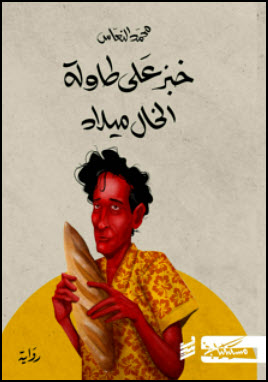
In a program this evening (May 22) here in Abu Dhabi, the International Prize for Arabic Fiction (IPAF)) has announced that Libyan novelist Mohammed Alnaas has won the program’s 15th edition top honor for his book Bread on Uncle Milad’s Table, which is published by Rashm Publishing and Distribution.
 At 31, Alnaas is the youngest author to win this coveted honor, and he’s the first winning author from Libya.
As Publishing Perspectives readers know, one of the most valuable aspects of the International Prize for Arabic Fiction is that it carries funding for an English translation, as well as paying a purse of $US50,000.
The shortlisted finalists each receive US$10,000.
In providing a descriptive rationale for the jurors’ decision in favor of Bread on Uncle Milad’s Table, jury chair Shukri Mabkhout is quoted, saying that the book “is written in the form of confessions of personal experience.
“Its plethora of detail is deftly unified by a gripping narrative. This offers a deep and meticulous critique of prevailing concepts of masculinity and femininity and the division of work between men and women, and the effect of these on both a psychological and social level.
“It falls into the category of novels that question cultural norms about gender. However, it’s embedded in its local Arab context and steers away from any ideological treatment of the issues, as such a treatment would be contrary to the way in which fiction can present multiple points of view.”
Alnaas is a journalist and short-story writer, a native of Libya.
He obtained a BA in electrical engineering from the University of Tripoli in 2014, and his short story collection “Blue Blood” was published in 2020. Bread on Uncle Milad’s Table (2021) was written in just six months during lockdown and while Tripoli was under bombardment.
The author has said that writing the book was his “refuge from insanity” amid the news of the still ongoing coronavirus COVID-19 pandemic and war.
In tonight’s ceremony, a representative accepted the honor for Alnaas, who was not present. We’ll embed video of the program at the end of our report.
We repeat here for you the shortlist this year:
International Prize for Arabic Fiction 2022 Shortlist
| Author | Title | Country of Origin | Publisher |
| Tarek Imam | Cairo Maquette | Egypt | Al-Mutawassit |
| Reem al-Kamali | Rose’s Diary | United Arab Emirates | Dar al-Adab |
| Bushra Khalfan | Dilshad | Oman | Takween-Iraq |
| Mohsine Loukili | The Prisoner of the Portuguese | Morocco | Dar Mim |
| Khaled Nasrallah | The White Line of Night | Kuwait | Dar Al Saqi |
| Mohammed Alnaas | Bread on the Table of Uncle Milad | Libya | Rashm |
Mabkhout is accompanied on the jury by:
- Libyan doctor, poet, and translator Ashur Etwebi
- Lebanese writer and PEN International board member Iman Humaydan
- Kuwaiti poet and critic Saadiah Mufarreh
- Bulgarian academic and translator Baian Rayhanova
“The confusion has originated with the fact that the International Prize for Arabic Literature—which is currently sponsored by the Abu Dhabi Arabic Language Centre—was at one time “mentored” by the Booker program but no connection is in place between the two prize regimes.
The prize also has support from the Abu Dhabi International Book Fair, which opens Monday (May 23).
Here’s the video from tonight’s (May 22) awards ceremony in which a representative for Alnaas accepted his award.
Past winners in the program are:
- 2008: Sunset Oasis by Bahaa Taher (Egypt)
- 2009: Azazeel by Youssef Ziedan (Egypt)
- 2010: Spewing Sparks as Big as Castles by Abdo Khal (Saudi Arabia)
- 2011: The Arch and the Butterfly by Mohammed Achaari (Morocco) and The Doves’ Necklace by Raja Alem (Saudi Arabia)
- 2012: The Druze of Belgrade by Rabee Jaber (Lebanon)
- 2013: The Bamboo Stalk by Saud Alsanousi (Kuwait)
- 2014: Frankenstein in Baghdad by Ahmed Saadawi (Iraq)
- 2015: The Italian by Shukri Mabkhout (Tunisia)
- 2016: Destinies: Concerto of the Holocaust and the Nakba by Rabai al-Madhoun (Palestine)
- 2017: A Small Death by Mohammed Hasan Alwan (Saudi Arabia)
- 2018: The Second War of the Dog by Ibrahim Nasrallah (Palestine)
- 2019: The Night Mail by Hoda Barakat (Lebanon)
- 2020: The Spartan Court by Abdelouahab Aissaoui (Algeria)
- 2021: Notebooks of the Bookseller by Jalal Barjas (Jordan)


