

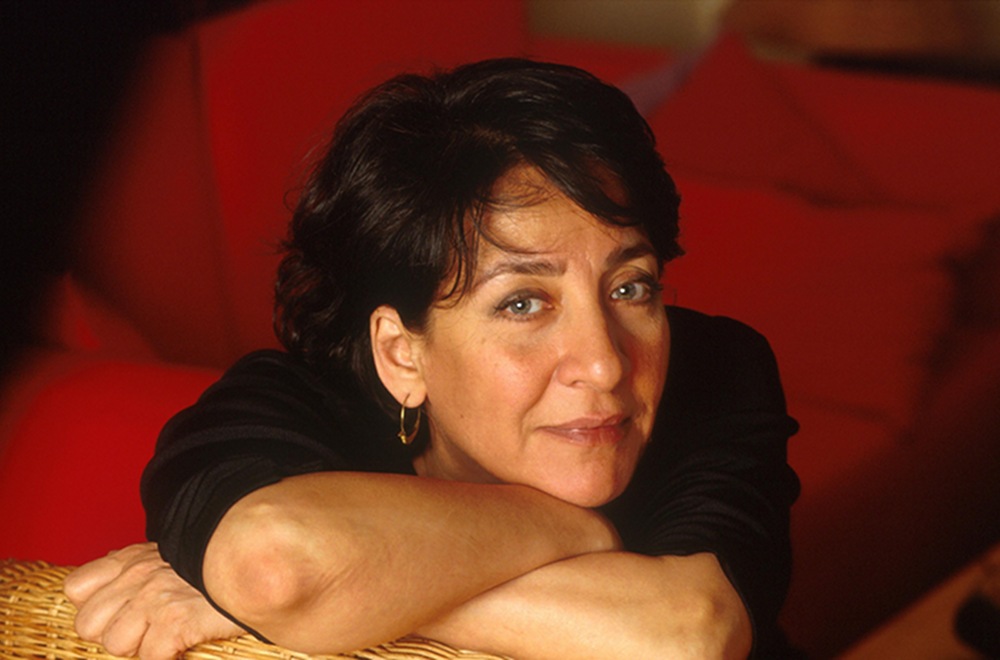
Di India Stoughton da The Daily Star (Libano) del 15 aprile 2015
Il quotidiano The Daily Star propone un’intervista a Hoda Barakat, scrittrice di origine libanese che è tra i finalisti del Man Booker International Prize. Si tratta di un premio che viene assegnato sulla base di una valutazione dell’intera produzione letteraria di un autore che quest’anno verrà il 19 maggio.
BARAKAT ON LITERATURE, LEBANON’S PAST
Lebanese author Hoda Barakat was as surprised as anyone when she found out that she was under consideration as a potential winner of the sixth Man Booker International Prize. In fact, she had never heard of the 60,000 pound award until she received a call at work informing her that she had been chosen as one of 10 finalists for the 2015 prize.Unlike the annual Man Booker Prize for Fiction, which is awarded for a specific English-language novel, the biannual Man Booker International Prize is awarded on the basis of an author’s complete body of work and is open to authors whose work is widely available in English-language translation, as well as those writing in English. Barakat was born in Beirut in 1952. She has lived in Paris since 1989, but writes exclusively in Arabic. She has published five novels, two plays, a book of short stories and a book of memoirs, and her work has been translated in multiple languages. Three of her novels currently exist in English translation, under the titles “The Stone of Laughter,” “The Tiller of Waters” and “Disciples of Passion.”A jury of former judges and winners of the Man Booker and Man Booker International Prizes selected the list of ten finalists. Barakat is the second Lebanese author to be included on the shortlist for the prize, following Amin Maalouf, who was selected in 2011. The famously reticent author took some time out to conduct a phone interview from Paris, telling The Daily Star about literature in translation, Western recognition and the ways in which the Lebanese Civil War shaped her as a writer.
Q: How did it feel when you learned that you had been selected as a finalist for the Man Booker International Prize?
A: In fact I was very surprised, because I hadn’t really heard anything about this prestigious prize. They called the digital newspaper where I work and I thought I had misheard. … I was surprised as well because on a day-to-day basis I’m not exactly connected. I don’t have Facebook. I don’t have Twitter. I don’t have a website. So I don’t really know the Anglophone world very well. … But of course it was extremely happy news.
Q: Do you see any commonalities between the 10 authors selected as potential candidates for this year’s prize?
A: I think they’re all very different, which perhaps gives the prize a bit more credibility…. Overall I don’t see a lot of points in common, but I know that they are truly authors of a great quality. I write it Arabic and I’m known in the Francophone world but really not at all in the English-speaking world. … That means that the people on the jury have really made an effort to search for candidates.
Q: How do you feel about the fact that your books are being judged in translation, rather than the original Arabic?
A: I was lucky enough to stumble across the dream of all writers, that is to say a great translator. For me that was Marilyn Booth, who translated my work into English.She is a very, very good translator. She translated two of my novels. There is a third novel, which exists in a translation that is not particularly good, but … maybe being shortlisted for this prize will facilitate the passage of my work into other languages.
Q: So you feel that the English-language translations of your novels retain your voice?
A: Yes. But I believe that … before placing an author on the list they read the work in the original language. I saw that they have included an Arabic professor on the jury, so I think she must have read what I’ve written before proposing me. … I’m not sure of their methods, but I guess that their reading wasn’t confined to English. I’m very happy, even if I don’t win, to have been included on the list, but I want to add something that is very important for me. I write in Arabic, and my books are set in the Arab world, and the readers that I have in mind are Arab, but what aggravates me slightly is that my recognition always comes from the Western world. I would like to know why, because I don’t write shocking or provocative literature. It’s true that there are readers who love my work but I don’t have a huge Arab following. … My aim is not to be recognized in the West. I don’t consider that to be more important than being recognized for my work in the Arab world. There are a lot of advantages to writing in a European language, but I will continue to write in Arabic. Whether recognition comes or not, my world is the Arab world.
Q: Having lived in Paris for over 25 years, have you ever considered writing in French?
A: No. I think that living outside Lebanon makes me even more attached to the Arabic language. It’s almost the only thing I have left. On top of that, it’s the language that shapes my thoughts. That is to say that I wouldn’t write the same books in a different language.
Q: Your novels are mostly set during the Civil War …
A: Yes, of course. Perhaps not all my books, but the experience that we lived during the Civil War, at the beginning of which I was still quite young, gave another dimension to our sense of self. This was a formidable event, which lasted a very long time and fundamentally changed us. I move away from the events of the Civil War in Lebanon at times in order to explore much broader topics like human nature and the human condition – the values we were given at a time when peace no longer functioned, after having discovered the immense violence of which we were capable.My last novel finishes on the brink of the Civil War, in an attempt to ask questions about what happened in our recent history and why we didn’t succeed in creating this common space that is citizenship. But even if I write about events that are not strictly Beiruti or Lebanese, I am still this Lebanese writer who witnessed all that. It’s a form of literary identity, if you want.
Q: You’ve been living in Paris for decades now, but all your novels are set in the Arab world. What drives you to explore Lebanon’s past so consistently in your work?
A: Personally I don’t think that my books do speak about the past, above all because this past is not really over. I believe that if we don’t examine very closely the things that we experienced in the past, we can’t begin to speak about the present. Our task is always to strive to understand. … Does a novel set in the future tell us about the future, or does it tell us about the present that we’re living? I believe that the time of the events in a novel is not really important. It’s the characters and the story that count.
The winner of the Man Booker International Prize 2015 will be announced on May 19. For more information, please visit www.themanbookerprize.com.


